The formalities for applying for social housing
As a leading social housing provider, allocating housing is one of our core missions. To act with complete transparency, our allocation system is governed by a charter accessible to all.
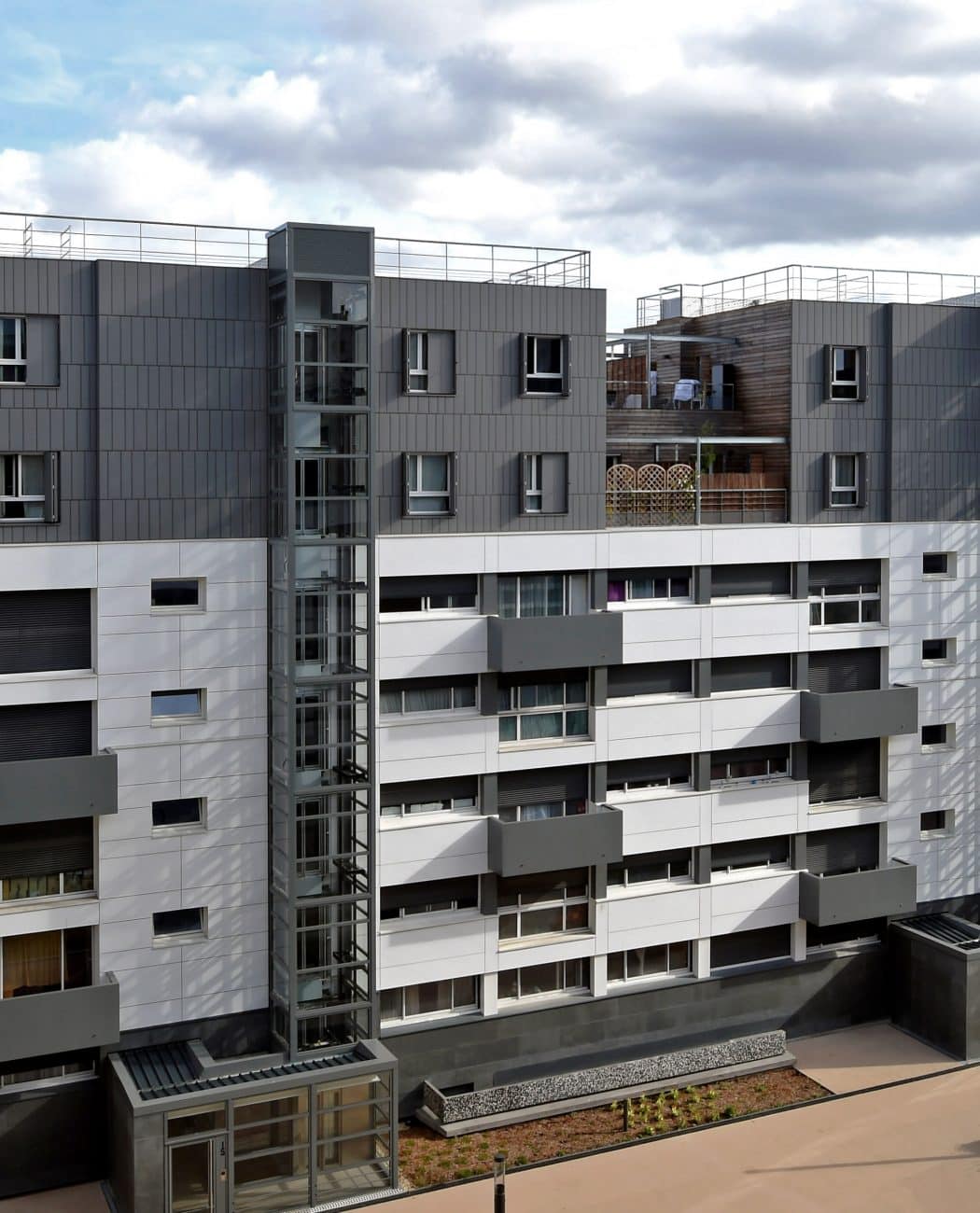
What is social housing?
Social housing, or HLM housing, is housing built with funding from the State and local authorities and is therefore subject to precise construction, management and allocation rules. Rents are capped, and access to housing is subject to income ceilings.
Am I eligible for social housing?
To obtain social housing, you must apply for it. Only applications from people who meet the allocation requirements can be granted.
To be eligible for social housing, you must meet 2 conditions:
be a French national or hold a valid residence permit
provide proof of income not exceeding a maximum amount. This maximum amount depends on your family situation and the location of the housing. The income taken into account is the reference taxable income for year n-2.
Simulator "Social housing: test your eligibility"
Households experiencing poor housing conditions or financial hardship, as well as victims of violence, people with disabilities or those losing their independence, are given priority. Appropriate social support may be offered to facilitate integration into the housing.
GOOD TO KNOW
How do I apply for social housing?
Online To apply for social housing, the easiest option is to log on to the website dedicated to social housing applications. You will be asked for a certain amount of information: proof of identity, proof of income and resources. You must complete the online form carefully and submit these documents as soon as possible. A unique registration number will then be provided to you. It serves as proof of your application and will be used to complete your file and track its progress.
Paper form You can submit your application using form Cerfa No. 14069*05. It allows you to submit an initial application, renew it or amend it. You can make an appointment at a housing reception point at the arrondissement town hall for your initial application. You can also visit one of the 700 services in the Île-de-France region.
Please note that, in all cases, an unsuccessful social housing application must be renewed every year.
A demanding charter
As early as December 2001, Paris Habitat adopted a housing allocation charter, reflecting its commitment to rigour and transparency. In December 2024, a new version was adopted by the Board of Directors. It is the result of discussions by the group of directors who are members of the housing allocation commission.
The purpose of the charter is to clearly set out the organisation’s objectives: reaffirming Paris Habitat’s social mission, transparency in allocations and respect for social diversity. It also recalls the general principles governing housing allocation and the criteria adopted by the organisation.
The charter introduces measures aimed at:
Promoting equality in access to housing, with particular attention paid to proposals concerning buildings located in priority areas covered by the city policy
Facilitating the residential mobility of households renting social housing through the commitments set out in the Paris city mobility charter
Affirming equal treatment of applicants through the anonymous examination of applications by the allocation commission
Improving communication with applicants by notifying them of the commission’s decisions and informing them of the progress of the allocation proposal made to them
Making applicants active participants in their application process by publishing part of Paris Habitat’s own housing allocation stock via the link here and giving them the opportunity to apply for the housing they are interested in
The priority criteria defined by the charter apply to all applicants, whether or not they have been recognised under a scheme. This notably includes candidates given priority under DALO, as well as victims of domestic violence, people with disabilities, people suffering from loss of independence, and occupants of damaged housing…
Find out more
the “Paris Habitat housing allocation charter”
Paris Habitat’s residential mobility policy
Of the 783,000 applicants for social housing in Île-de-France, 30% already live in social housing. For Paris Habitat, 12,000 tenants have requested a transfer, representing nearly one tenant in ten.
The reasons vary widely: a desire for a different environment, to be closer to a place of work, the need for housing adapted to a disability situation… but above all, most of our tenants are looking for a larger home.
Of course, all these requests are legitimate. But not all of them can be met, and given the extreme scarcity of available housing, it is important to have a clear framework that determines the most urgent situations.
Paris Habitat continues to affirm its commitment to maintaining its level of effort in order to increase housing transfers for its tenants.
Thus, by allocating a quarter of its housing allocations to transfers, 900 Paris Habitat tenants were able to have their requests met in 2024. This is both a lot, but little compared with the 5,550 priority applications.
Certain rehousing situations must necessarily be taken into account:
When a building must be emptied as part of major rehabilitation work
When the housing solidarity fund requires rehousing as a condition for covering unpaid rent
When an occupant without rights or title is the subject of an exceptional rehousing decision approved by the housing allocation and occupancy review commission
For people who are proven victims of domestic or family violence.
For applications unrelated to these obligations, the priorities are clear:
Under-occupation, overcrowding, disability and the suitability of the tenant’s income for the occupied housing.
In light of these priorities, three groups of applications are identified according to specific criteria :
Ultra-priority applications, priority applications and applications outside the priority categories. The organisation has set ambitious targets, aiming for transfers to consist of 60% ultra-priority applications and 35% priority applications.
Find out more
Allocations by Paris Habitat in 2023
How are these criteria defined?
Under-occupation:
Applications for which the difference between the number of people to be housed and the number of rooms in the housing is greater than or equal to 2 are identified as ultra-priority applications: for example, 2 people in a four-room home. Greater attention will be paid to the most pronounced cases of under-occupation.
Other applications are given priority from a one-room difference : for example, 2 people in a three-room home.
As for single people living in a two-room home, they are given priority only if they cite the reason “housing too large” or “housing too expensive”.
Overcrowding:
Households for which each occupant has less than 9 m² are given the highest priority: this is calculated by comparing the number of people with the floor area of the occupied dwelling. Example: 4 people in a 2-room apartment measuring 35 m². This is the reference calculation for the DALO criteria. To prioritize other applications, two elements are taken into account: the number of additional people compared with the number of rooms in the occupied dwelling, as well as the floor area per person if it is less than 12 m².
Disability and/or reduced mobility situations:
Households in which one member can demonstrate the need for technical assistance (wheelchair, medical bed, patient hoist) AND whose dwelling is inaccessible or whose building is classified as unsuitable for cane users are given the highest priority. The same applies to households in which no member has a disability even though the occupied dwelling is accessible and adapted.
Applicants whose situation requires a dwelling with an additional bedroom because of autism within the family or to accommodate a third party (specified in the disability section of the DLS) are also given the highest priority.
Applicants seeking housing due to a disability, or housing that is unsuitable for a disability or loss of independence, AND who have declared a Mobility and Inclusion Card for disability are given priority.
Adequacy of resources:
Applications made on the grounds that the housing is “too expensive” in view of the household’s resources are given priority. The greater the mismatch between resources and housing costs, and the resulting payment difficulties, the higher the level of priority.
Applications for the same type of housing in a higher funding category are now given priority.
The scoring system:
The application score is defined for and by each territory. For Paris Habitat, in the context of transfers, the score is an additional assessment factor for applications that meet our priority criteria.
The score assigned to your application, defined for each territory, may be an additional assessment factor that supplements these criteria.
If your rental situation does not fall within one of the aforementioned criteria, the Office will not be able to offer you housing.
Other options may then be available to you:
You can play an active role in your housing journey by continuing or initiating procedures on the dedicated websites:
For more information, click here
Since the launch of the Echanger Habiter website in October 2018 with 12 member landlords, there are now more than 41 member landlords.
They represent 1,150,000 homes eligible for exchanges.
In 2024, more than 3,700 exchanges were completed following approval by the housing allocation committees, the signing of the tenancy agreements, and the completion of the outgoing and incoming check-in inventories.
A mobile application is available to make your procedures even easier.
For more information, click here
Loc’annonces mutations:
The City of Paris website has a section dedicated to housing changes for tenants in the social housing sector.
For more details, click here
You can also apply through the 1% logement scheme, now called Action Logement, if you are an employee of a company with more than 10 employees. Click here to find out more.
To best meet your housing mobility needs, it is essential to report any changes in your family situation and current housing. When your application is next updated or renewed, do not hesitate to contact your agency. You will be able to review your application with your housing manager and see where you stand among our 12,000 applicants seeking a change of housing.
To increase the chances of offers resulting in a positive outcome, Paris Habitat implements multiple applications, meaning that the same dwelling is offered simultaneously to several households. This also enables the Paris Habitat housing allocation committee to carry out the ranking of applications entrusted to it by Decree 2007-1677 of 28/11/2007.
Given the scarcity of available housing and the ever-increasing pressure on social housing, in order to make offers to as many people as possible, a tenant who refuses two suitable housing offers within a 12-month period will have their application given lower priority by and for Paris Habitat for one year.